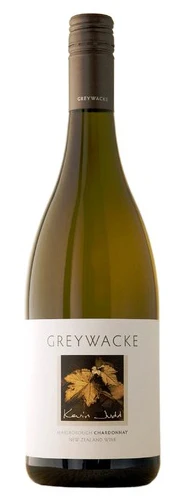
Greywacke Chardonnay
The majority of the fruit was sourced from the upper Brancott Valley with the balance coming from its lower reaches. Typical of this sub-region, the wind-blown loess soils are comprised of clay-loams with varying degrees of gravel content. Both vineyards are planted with the low-yielding Mendoza clone, known for its propensity for millerandage (small and normal sized berries in the same bunch) and were trained on a two-cane VSP trellis.
The two vineyards were hand-picked separately at high ripeness levels and whole bunch pressed using very low maceration press cycles. The resulting juice was settled and racked to French oak barriques (20% new). The juice was allowed to undergo spontaneous indigenous yeast fermentation, the final phase continuing for many months. The wine received occasional lees stirring and underwent a complete malolactic fermentation. It was transferred out of oak after 18 months and bottled in December 2012.
The two vineyards were hand-picked separately at high ripeness levels and whole bunch pressed using very low maceration press cycles. The resulting juice was settled and racked to French oak barriques (20% new). The juice was allowed to undergo spontaneous indigenous yeast fermentation, the final phase continuing for many months. The wine received occasional lees stirring and underwent a complete malolactic fermentation. It was transferred out of oak after 18 months and bottled in December 2012.
$54.28
Greywacke Chardonnay—
$54.28
Product Information
Product Information
Shipping & Returns
Shipping & Returns
Description
The majority of the fruit was sourced from the upper Brancott Valley with the balance coming from its lower reaches. Typical of this sub-region, the wind-blown loess soils are comprised of clay-loams with varying degrees of gravel content. Both vineyards are planted with the low-yielding Mendoza clone, known for its propensity for millerandage (small and normal sized berries in the same bunch) and were trained on a two-cane VSP trellis.
The two vineyards were hand-picked separately at high ripeness levels and whole bunch pressed using very low maceration press cycles. The resulting juice was settled and racked to French oak barriques (20% new). The juice was allowed to undergo spontaneous indigenous yeast fermentation, the final phase continuing for many months. The wine received occasional lees stirring and underwent a complete malolactic fermentation. It was transferred out of oak after 18 months and bottled in December 2012.
The two vineyards were hand-picked separately at high ripeness levels and whole bunch pressed using very low maceration press cycles. The resulting juice was settled and racked to French oak barriques (20% new). The juice was allowed to undergo spontaneous indigenous yeast fermentation, the final phase continuing for many months. The wine received occasional lees stirring and underwent a complete malolactic fermentation. It was transferred out of oak after 18 months and bottled in December 2012.